
Nordic Electricity Market – Q2 2026
During Q2 2026, extreme imbalance price events became less frequent following the cold start of the year, while relative imbalance levels increased towards summer despite stable absolute imbalance volumes. BRP growth continued across the Nordic market.
This report reviews key developments in the Nordic electricity markets during the second quarter of 2026 from an imbalance settlement perspective. It focuses on imbalance prices, volumes, and market participant behavior. The report is based on data available at the time the imbalance settlement for the quarter is closed.
Volatility persists, but extreme imbalance prices occurred less frequently
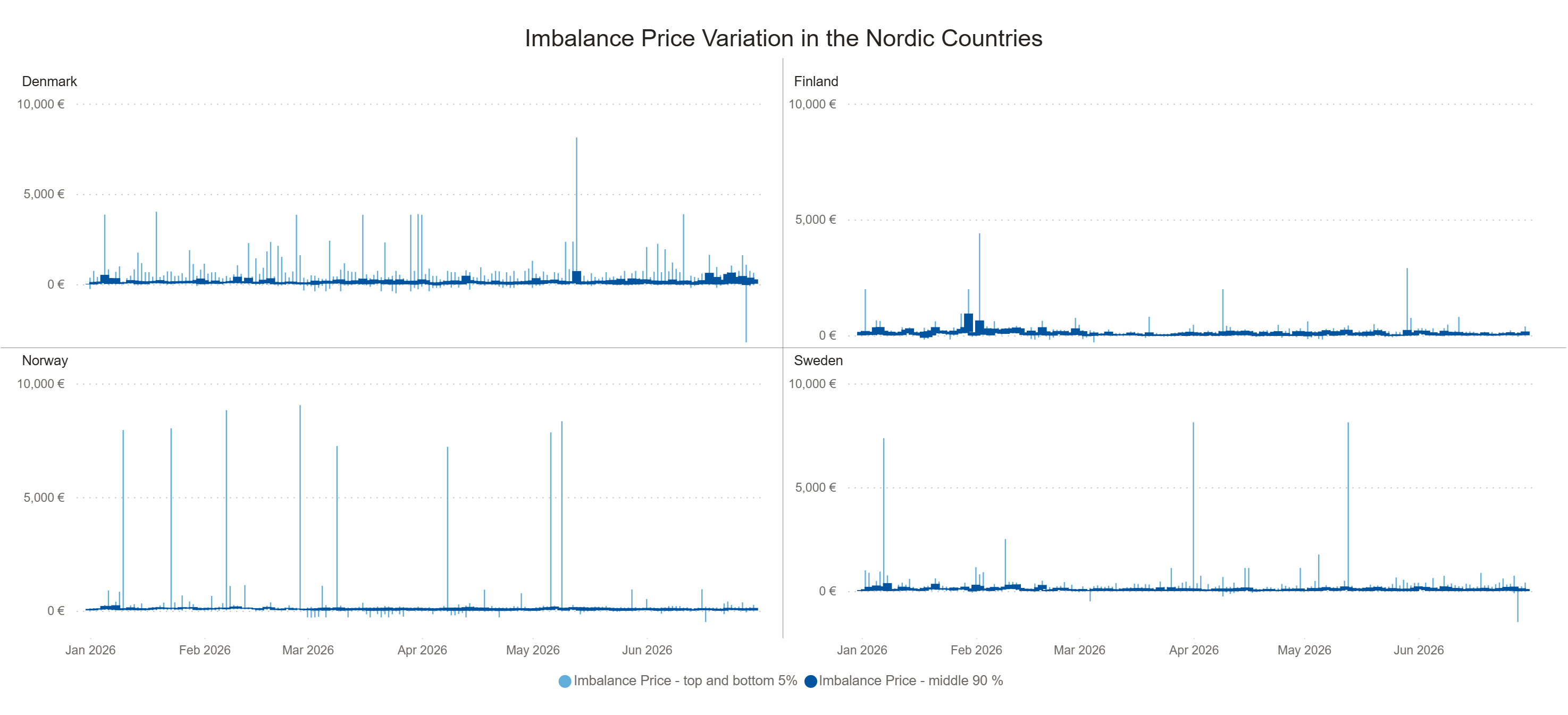
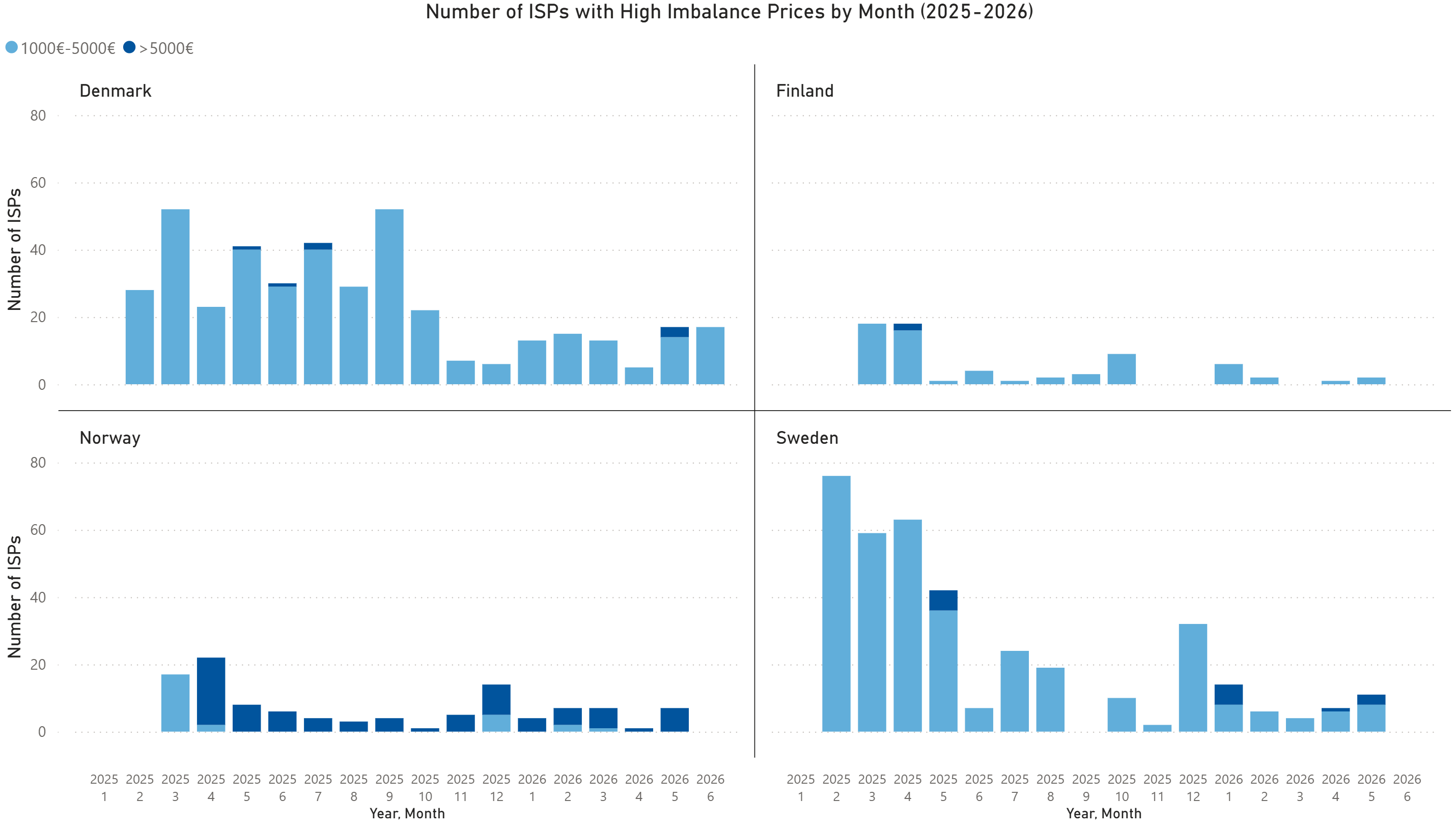
Imbalance prices remained volatile during Q2 2026, with price spikes continuing to occur across all Nordic countries. However, the frequency of extreme price events was somewhat lower than during the beginning of the year, and the number of ISPs with imbalance prices above 1,000€ and 5,000€ remained below the levels observed in 2025. The occurrence of extreme imbalance prices has therefore continued to decrease from the elevated levels seen following the implementation of the mFRR EAM in March 2025.
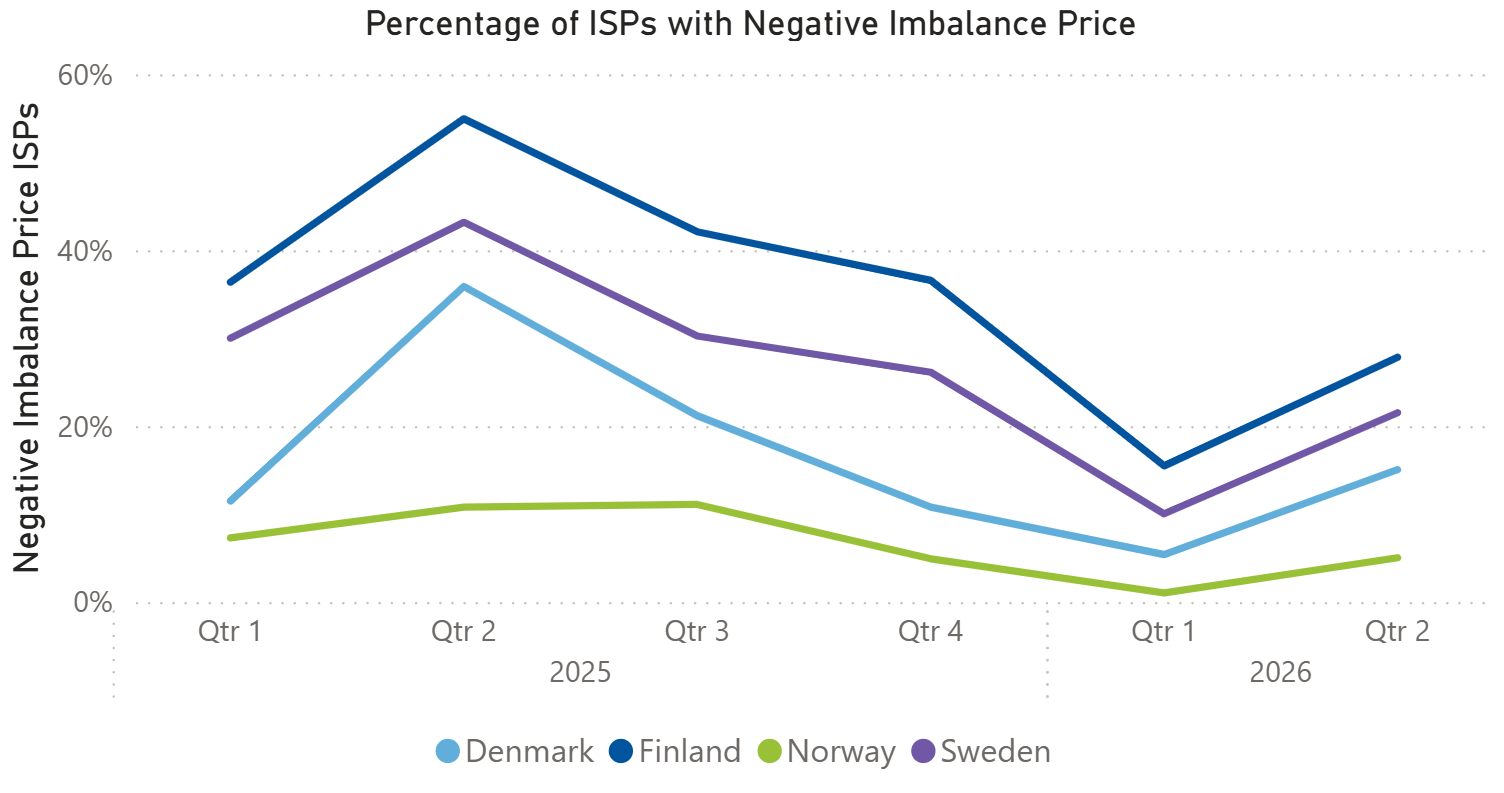
Negative imbalance prices became more frequent compared to Q1 2026. A similar seasonal pattern was observed in 2025, with the share of negative imbalance prices increasing during the second quarter. Despite the increase, their share remained below the levels observed during much of 2025.
Imbalance volumes remain stable while relative imbalance levels increase towards summer
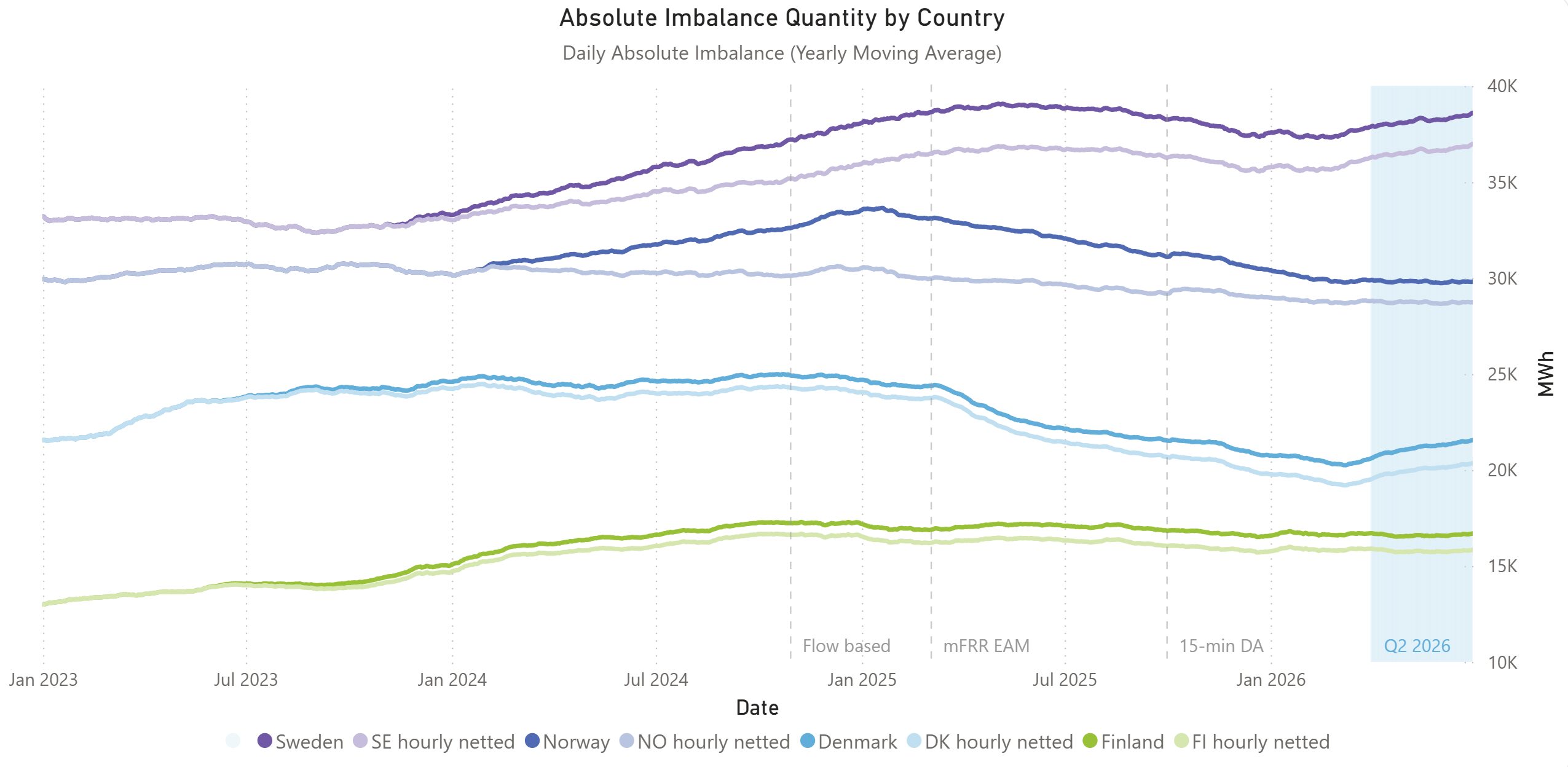
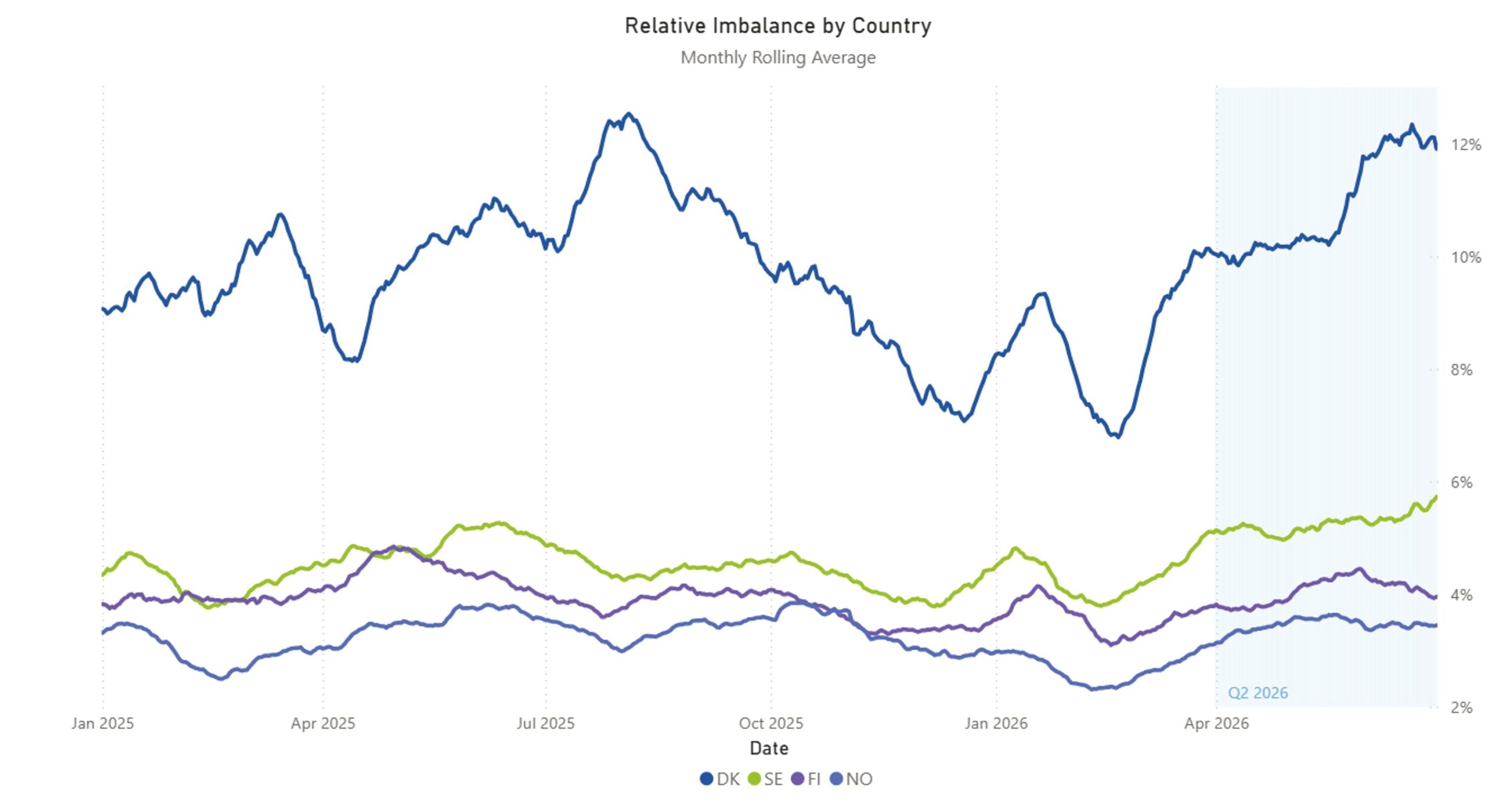
Absolute imbalance quantities remained relatively stable during Q2 2026 across the Nordic region. Finland and Norway showed little change compared to the previous quarter, while Sweden and Denmark experienced a slight increase in imbalance volumes. Alongside the absolute imbalance quantities shown in the first figure, the second figure presents relative imbalance, which measures imbalance volumes in relation to overall market activity. Relative imbalance is defined in the NBS Handbook and is calculated as:
Relative Imbalance = Absolute Imbalance Quantity / (|Consumption| + |Sales|)
Relative imbalance levels increased across all Nordic countries during Q2 2026. This development can partly be explained by seasonal effects, as electricity consumption typically decreases towards the summer months. As a result, a similar absolute imbalance volume represents a larger share of total market activity. Consequently, relative imbalance increased towards summer even though absolute imbalance volumes remained broadly stable throughout the quarter.
Trader BRPs continues to account for most new market entries
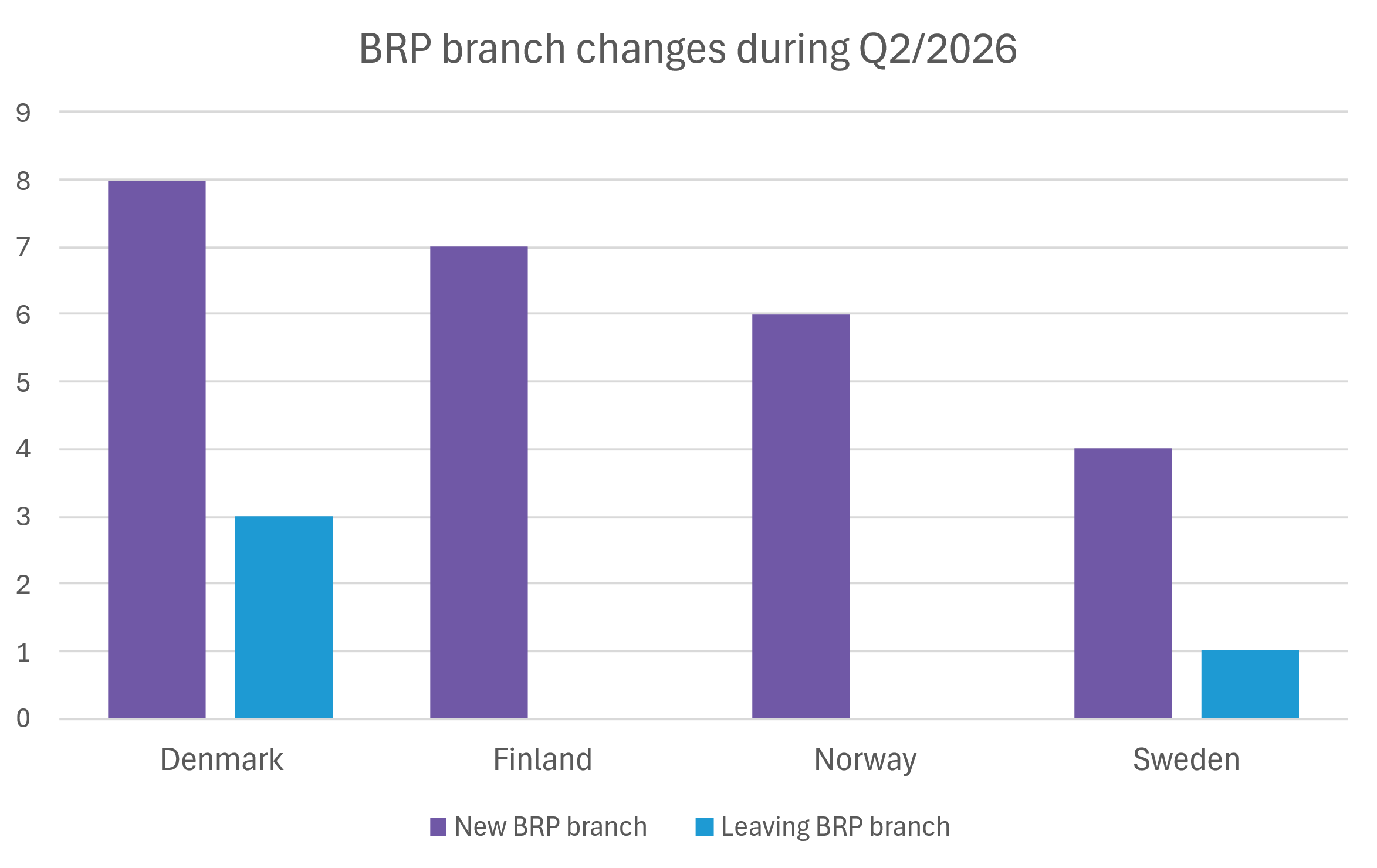
The number of BRPs continued to grow in Q2 2026. The figure shows new and leaving BRP branches registered during the quarter by country, with a total of 25 new BRP branches. New market entries were observed across all Nordic countries and were relatively evenly distributed between countries. As in Q1, traders accounted for most new BRPs entering the market and continued to drive the overall growth in the number of market participants.
Absolute imbalance amounts increase following cold start to the year
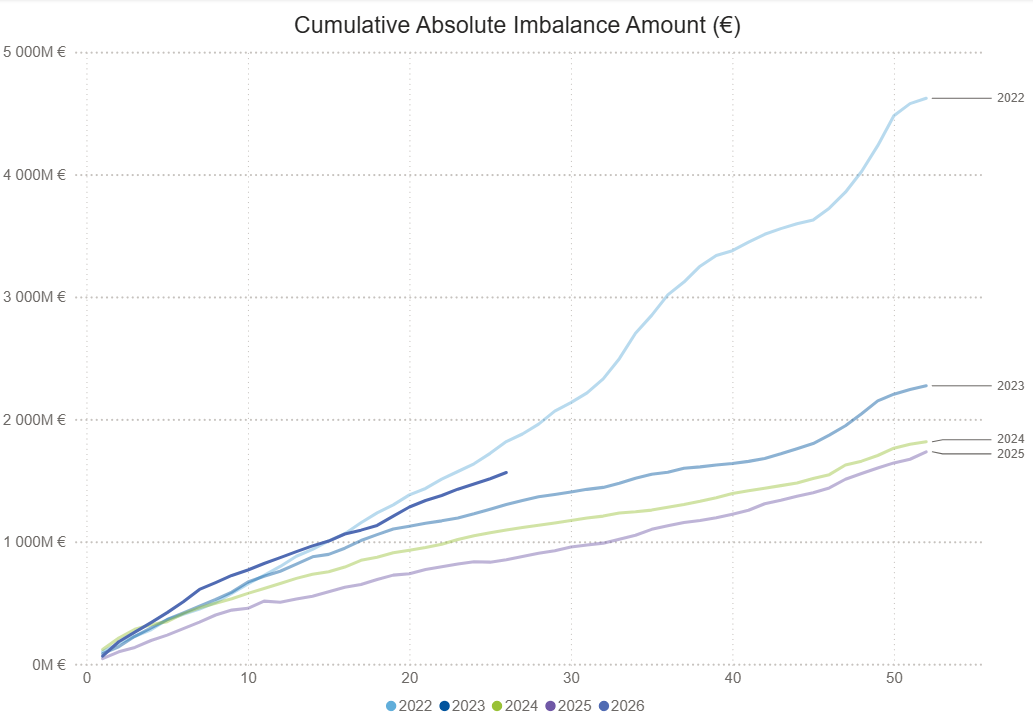
The higher absolute imbalance amounts, calculated as total sum of eSett imbalance purchase and sales, observed in 2026 are largely attributable to the cold start of the year. January and February experienced the highest imbalance prices seen in recent years, driven by increased electricity demand during cold weather conditions. This resulted in higher settlement amounts and a steeper accumulation compared to the last four years. Since then, market conditions have largely normalized, and the development has followed a trajectory closer to historical averages. While 2026 is currently trending above the three previous years, it is well below the extraordinary levels observed during the energy crisis 2022. The higher cumulative settlement amounts observed in 2026 therefore stem primarily from the exceptional market conditions at the beginning of the year, while the second quarter has developed broadly in line with historical patterns.
Key messages
Following the unusually volatile start to the year, market conditions normalized during Q2 2026. Extreme imbalance price events became less frequent, while absolute imbalance volumes remained stable and relative imbalance levels increased towards the summer months. At the same time, BRP growth continued across the Nordic market, with new market entries in all countries.